
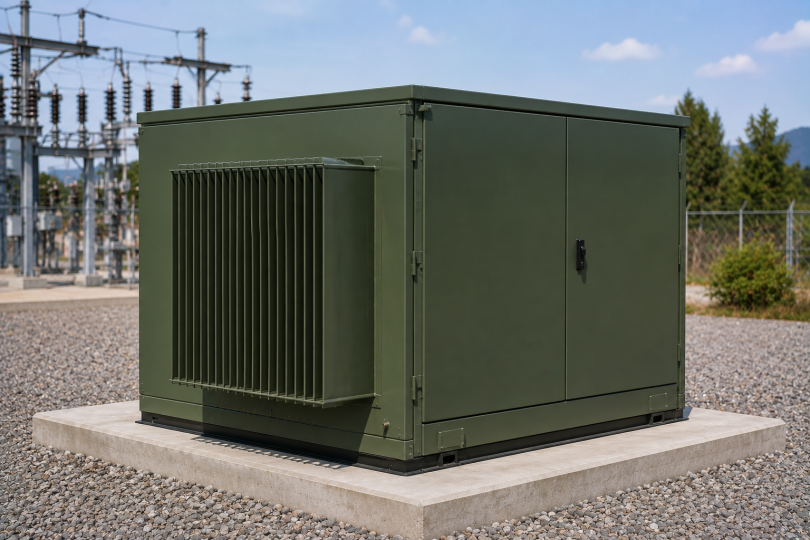

A 50 kVA 3 phase transformer is designed to transfer electrical power between voltage levels in three-phase distribution systems. Its 50 kVA capacity indicates the apparent power rating the transformer can handle under its specified operating conditions.
Three-phase transformers are widely used in commercial buildings, workshops, agricultural facilities, small industrial installations, and distribution networks. They can supply balanced three-phase loads while maintaining the required secondary voltage for connected equipment.
The transformer rating should be selected according to the expected load, operating voltage, installation conditions, and future demand. Choosing a unit that closely matches the application can help maintain dependable operation without unnecessarily increasing equipment costs.
Understanding the 50 kVA Rating
The kVA rating represents the transformer’s apparent power capacity rather than its real power consumption. For a three-phase transformer, the relationship between apparent power, line voltage, and current can be expressed as:
kVA = √3 × Voltage × Current ÷ 1,000
For example, a 50 kVA unit operating on a 400 V three-phase secondary system can deliver approximately 72 A of line current under the rated conditions:
50,000 ÷ (√3 × 400) ≈ 72 A
Actual operating current depends on the transformer’s rated secondary voltage and installation requirements.
A transformer should not normally be selected solely from the nameplate capacity of existing equipment. Motor starting currents, continuous loads, harmonics, ambient temperature, and expected expansion may affect the appropriate rating.
50 kVA Transformer Specifications to Check
Reviewing the 50 kVA transformer specifications is essential before selecting a unit for an electrical installation. The nameplate and technical documentation should provide the information needed to confirm compatibility with the system.
Important specifications commonly include:
- Rated capacity: 50 kVA
- Primary voltage
- Secondary voltage
- Number of phases
- Frequency
- Connection configuration
- Winding material
- Impedance
- Insulation level
- Temperature rise
- Cooling method
- Enclosure type
- Tap arrangement
- Applicable electrical standards
The primary and secondary voltage must match the distribution system. The frequency rating must also correspond to the supply network.
Winding configuration matters because it affects how the transformer connects to the upstream and downstream systems. Vector group information may also be required for installations involving parallel operation or particular protection arrangements.
Impedance is another useful specification. It influences fault current and voltage regulation, so it should be considered alongside the protection equipment installed around the transformer.
Where a 50 kVA Unit Can Be Used
A 50 kVA capacity can suit installations with moderate electrical demand. Common applications include small commercial properties, workshops, farms, pumping systems, retail facilities, and auxiliary electrical distribution.
The actual suitability depends on the connected load. A facility with several motors may have different transformer requirements from a building dominated by lighting and electronic equipment.
Load calculations should account for continuous operating demand as well as equipment that starts intermittently. Motors, compressors, pumps, welding equipment, and other machinery can create temporary current demands that influence transformer selection.
Future electrical expansion should also be considered. Installing a transformer with insufficient capacity can result in excessive loading, while an unnecessarily oversized unit may increase initial and operating costs.
Pad-Mounted Installation for Outdoor Distribution
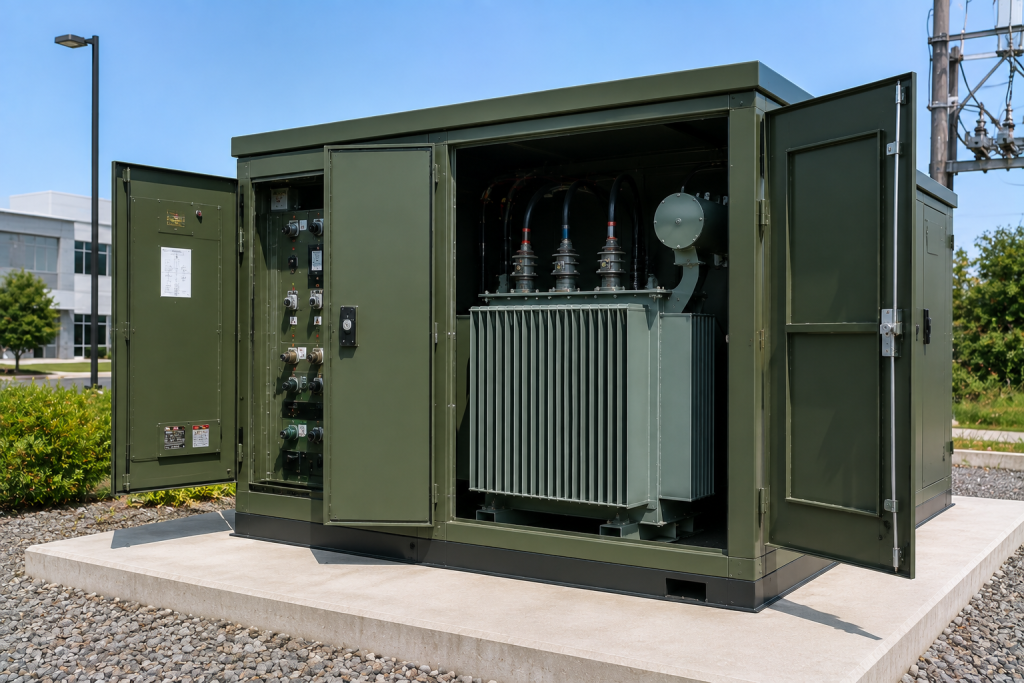
A 50 kva pad mounted transformer is installed on a concrete pad and is generally enclosed in a cabinet designed for outdoor distribution applications. This configuration can be useful where overhead transformer installation is unsuitable or where underground distribution is preferred.
Pad-mounted units are commonly positioned near the buildings or equipment they supply. Their enclosure protects the transformer components from normal outdoor exposure while providing controlled access to connection and protection equipment.
Installation requires suitable clearance, grounding, cable routing, drainage, and access arrangements. Local electrical requirements should determine the precise installation layout.
The transformer location should also allow authorized personnel to inspect and service the equipment without unnecessary obstruction. Ventilation and environmental conditions should be considered according to the transformer’s construction and manufacturer requirements.
Factors That Affect 50 kVA Transformer Price
The 50 kVA transformer price can vary considerably because transformer construction and installation requirements differ between projects. A basic comparison based only on kVA rating may overlook several cost factors.
Price can be influenced by:
- Dry-type or oil-filled construction
- Indoor or outdoor installation
- Pad-mounted or other enclosure designs
- Primary and secondary voltage
- Copper or aluminium windings
- Tap requirements
- Insulation class
- Efficiency requirements
- Protection accessories
- Transport requirements
- Testing and certification
- Installation and commissioning
The purchase price is only one part of the overall project cost. Cables, switchgear, protective devices, foundations, earthing materials, transportation, and installation can add substantially to the final expenditure.
Comparing quotations using the same technical requirements provides a more useful assessment than comparing headline prices alone.
Choosing Between Dry-Type and Oil-Filled Designs
Dry-type transformers use air or another non-liquid insulation system, while oil-filled transformers use insulating liquid around the core and windings. Each construction has applications where its characteristics may be advantageous.
Dry-type equipment is frequently considered for indoor electrical rooms and locations where liquid-filled equipment is unsuitable. Oil-filled designs are commonly used for outdoor distribution and utility applications.
The decision should consider installation location, fire requirements, maintenance practices, environmental conditions, available space, and applicable standards.
A technical specification should be prepared before requesting quotations. This prevents suppliers from pricing different transformer configurations and makes the resulting offers easier to compare.
Installation and Maintenance Considerations
Correct installation affects transformer performance and service life. The foundation or mounting arrangement should support the equipment adequately, while electrical connections must be correctly sized and securely terminated.
Grounding is particularly important. The transformer enclosure and applicable system points should be connected according to the electrical design and local requirements.
Routine inspection may include checking connections, enclosure condition, signs of overheating, unusual noise, contamination, and other visible changes. Oil-filled equipment may require additional inspection and testing of the insulating liquid according to the maintenance program.
Thermal conditions should also be monitored. Persistent overloading can increase winding temperature and accelerate insulation deterioration.
Comparing Transformers Before Purchase
A useful comparison should start with the electrical requirements rather than the product name. Confirm the primary voltage, secondary voltage, frequency, phase configuration, required capacity, installation environment, and protection requirements.
For a transformer 50 kva application, the same basic rating can be available in several configurations. Two units with identical kVA ratings may differ significantly in enclosure design, efficiency, insulation, cooling, impedance, and intended installation environment.
Documentation should also be reviewed before purchase. Technical drawings, nameplate information, test certificates, applicable standards, warranty terms, and installation instructions can help verify that the selected transformer matches the project.
Selecting the Right Configuration
A 50 kVA three-phase transformer can serve many moderate-load distribution applications, but the correct specification depends on the electrical system rather than the capacity rating alone.
Engineers and electrical contractors should verify load demand, voltage levels, phase arrangement, fault conditions, installation location, environmental exposure, and applicable regulations before ordering equipment.
A clear technical specification makes procurement easier and reduces the risk of receiving a transformer that requires modifications after delivery. It also allows different suppliers to quote against the same requirements.
For installations where space, safety, and outdoor distribution are major considerations, the enclosure and mounting arrangement deserve the same attention as the electrical rating. Proper selection at the design stage can support reliable power distribution and make future maintenance more manageable.

